translate This article was automatically translated from its original Español version. Read the original
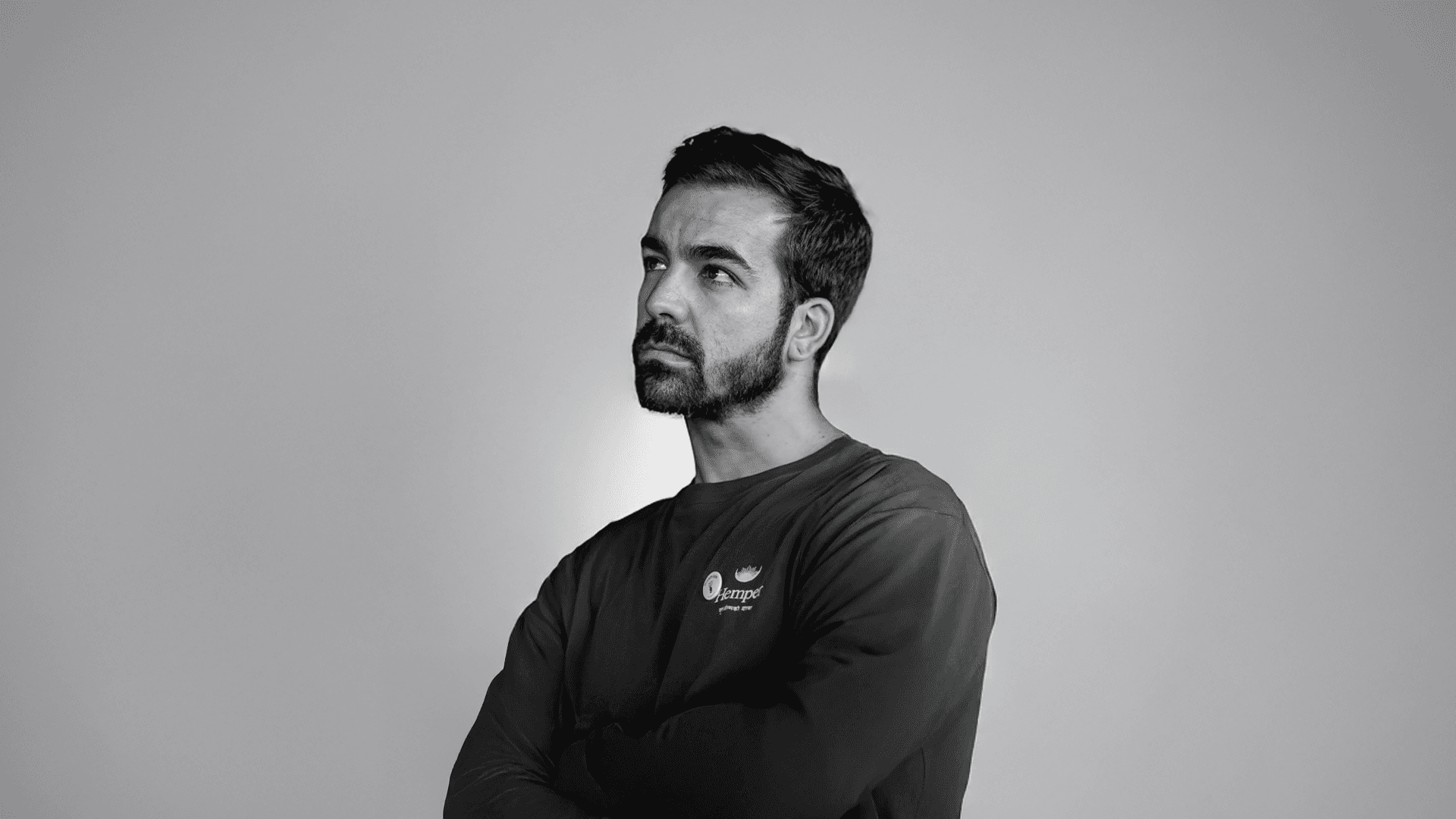
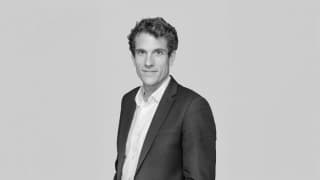
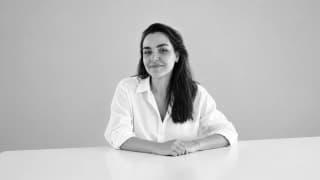
Guillermo Gauna-Vivas is the founder of Ayúdame 3D, which creates prosthetics for people in need around the world.
impact.info
Listen to the testimony of Guillermo Gauna-Vivas.
Questions fréquentes What is 3D printing and how is it applied in the creation of prosthetics? 3D printing is a technology that allows the creation of three-dimensional objects from a digital model. In the context of Ayúdame 3D, it is used to manufacture customized prosthetics that adapt to the specific needs of each person, thereby improving their quality of life.
What is the main mission of Ayúdame 3D? How does Ayúdame 3D ensure that its prosthetics are effective and suitable for each user? What social impact does the delivery of prosthetics have on the beneficiaries? How is Ayúdame 3D funded to continue its social work? María Díaz Valderrama
impact.info journalist
Published on 25 August 2026
Photo credit — Ayúdame 3D
Transcript Audio in Español — text automatically translated· AI-generated transcript
0:00 Impact.info, another way to start a business. 0:06 Good morning, welcome to the podcast for entrepreneurs who want to change things, 0:11 starting with their own companies. Companies and initiatives like the NGO Ayúdame 3D, 0:18 which creates 3D printed prosthetics for those in need. 0:25 Hello, I'm Guillermo Aunoivas, director of Ayúdame 3D, I'm from Madrid. 0:29 Tell me, Guillermo, what is Ayúdame 3D? 0:31 Well, Ayúdame 3D is an organization that helps with 3D printing for any 0:37 vulnerable group that exists, especially people with motor disabilities, 0:41 people who have suffered an amputation. We create assistive devices, prosthetics, 0:46 attachments, designs, to improve their quality of life always for free. 0:54 And how did the idea of printing prosthetics in three dimensions come about? 0:58 Well, it all started on a trip to Kenya, where I took five arms that I created for five 1:04 people there who had requested them, and it worked very well. I created the first arm 1:08 for people without elbows, it doesn't need any electronics and you can open and close the hand, 1:13 and well, it worked so well that I decided to open this NGO and continue helping anyone who 1:20 needs it. And what impact can receiving one of these prosthetics have for a person? Beyond 1:27 the physical, I understand that it is a technique that can change lives. Of course, the 3D printing of 1:36 these devices has given us the ability to help many people, and for these individuals 1:41 it has changed their lives in the sense of being more independent, being able to eat alone, drink 1:45 alone, have better jobs, that children can go to school, that they can be more independent, 1:51 and that greatly improves their quality of life. And how does the process work today? Tell me 1:58 a bit about how it goes from design to delivery of the piece, how does it work? Well, either individuals, 2:03 or social entities that collaborate with us, provide us with information about people with disabilities 2:07 who need this, we take the necessary measurements, photos, videos, and with that we create 2:12 the perfect prosthetic on the computer, we design it and print it directly in the office, 2:18 together with our collaborators, with printers all over Spain, and that is what we send directly 2:24 to the person who needs it, and we provide training on how to place it, use it, and well, that 2:30 is what makes it accessible to everyone. That is to say, it is not the people who 2:36 need it who request them directly, but rather through organizations. Both things, 2:42 it can be a person who visits us through the web, or it can be an organization that collaborates with 2:46 us, which in the end are our eyes in many countries, so we don't have to travel all the 2:51 time, and they are the ones who send us cases monthly of people who need it. Almost a decade 2:58 after your creation, how do you ensure the economic sustainability of Ayúdame 3D without losing 3:07 sight of the social mission? Well, like any other NGO. We are an organization that helps 3:14 for free, like any other NGO, and we have partners, we have donations, people who, in an 3:20 altruistic way, are supporting this project from 3 euros a month, and that allows us to 3:25 continue growing and helping many people. In addition, we have different proposals 3:31 for companies, for foundations, such as creating trophies and merchandise on the printers 3:37 that we use to make the arms for companies that request them, we carry out awareness activities 3:43 for large companies, we conduct educational programs in schools to raise awareness about 3:49 Children, and that also adds to the whole NGO part. And are they prosthetics, can they be arms, hands? 3:57 Yes, we have everything. We have already started, now we are in the final tests for legs, 4:03 and we are making arms, mainly, well, full arms, half arms. Well, 4:11 in the end it depends on each place, they ask us for one thing or another. How many prosthetics 4:17 have you been able to create over the years? How many people have you helped? Well, we have helped 4:21 directly, just with prosthetics, about 700 people worldwide. We have helped more 4:29 than 20,000 people with other different devices, for kids in pediatric 4:34 ecology, during the COVID period with devices for the protection of healthcare workers. In the end, 4:42 the help from M3D is help that can be anything. So, well, more than 20,000 4:47 people helped over these years, well, the truth is that we are very happy with what we have 4:51 achieved. And how has the expansion process been? You told me before that you started 4:57 in Kenya and now, well, you already work from Spain, but how did you grow, let's say? 5:04 Well, in a transparent and organic way. We opened a website, a Facebook page, 5:12 an Instagram page, and we started sharing what we were doing. And little by little, we have been receiving requests 5:18 from many people, we have won many awards, appeared in the press, which has allowed us to reach 5:24 people who didn't know we existed but needed our help. And so, little 5:28 by little we have been creating this network, this Ayúdame3D ecosystem, which allows us to reach all the 5:34 parts of the world and help people who previously didn't even know they could be helped. 5:41 For those of us who are not immersed in the world of 3D printing, 5:46 it might be harder for us to understand the revolution that this tool could represent. What do you 5:53 see as its potential, for example, in the healthcare field, where you work the most? 6:00 Well, it's incredible, right? Because apart from what we do, we have hospital allies 6:07 who are 3D printing the actual body of the person who is going to be operated on, 6:15 so that they can operate on that 3D printed model beforehand, for example. And this reduces costs 6:21 and reduces risks, because the healthcare professional can operate without any risk on a 6:27 model and then enter the operating room much more safely. And they are also starting to 6:33 develop cells with 3D printing to create tissues. So, well, 3D printing is something 6:40 that is not talked about much but is really changing that industry, the healthcare industry, but also others. And also, can it be a tool to reduce inequalities? 6:46 Of course, in the end, 3D printing has given us a tool that was previously impossible 6:53 to obtain, the creation of products in our room. Allowing people who cannot afford an industrial machine, to have next to their desk a machine that 6:59 can create a solution for something, a prototype. And that is what has allowed us to grow. 7:05 Having access to 3D printing and being able to solve a problem that had never been solved before. 7:11 We are talking with Guillermo Gauna Vivas, CEO of Ayúdame3D. What advice would you give to 7:16 other entrepreneurs who want to, well, combine technology and social impact? 7:22 That the only way to start a business is socially. I mean, it no longer makes sense to start a business if it's not 7:29 to solve a problem that exists in the world. And that's why it's important to think about that 7:34 sustainable and scalable business model so that you not only help in the first year and that's it, with that 7:39 idea you had and that excites you, because if you don't help in the following years you will leave the 7:43 7:49 , 7:54 many people without helping or solving that problem. That's why it's so important to learn to develop 8:00 a sustainable and scalable business model for your social entrepreneurship alongside that help. 8:04 And thus achieve not only to help 100 people, maybe, from a group, but thousands of 8:09 people. So that we can have something that is truly worth pursuing. 8:22 In Spain, 18 years is the legal age to create your own company. Where did you see yourself when you were 18? 8:29 Well, studying an engineering degree that I wasn't really sure where it would lead. 8:37 In fact, when I was in college or even when I started doing Ayúdame3D, 8:45 the word entrepreneurship wasn't very well known. It was something that I really associated more with 8:52 people who could afford to create their own company, whose parents gave them money to 8:57 create something. And suddenly you realize that the accessibility to create companies or projects 9:03 is much broader now, or at least we've been empowered with a mindset to say that yes, 9:08 we can. I would have never imagined creating my own project at 18 and 9:14 I feel that now people at this age can consider it much more. 9:20 Thanks to Guillermo Gauna-Vivas, CEO of Ayúdame3D. You can listen to this interview on the impact.info website. 9:27 You've listened to impact.info, another way to undertake.