translate This article was automatically translated from its original Français version. Read the original
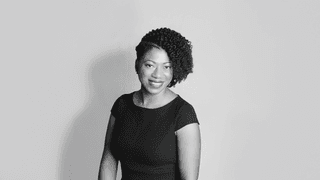
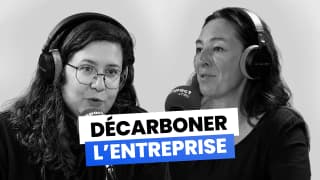
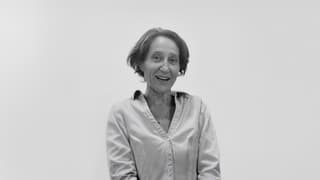
Valérie Dumesny is the General Manager of Locaverre - Ma Bouteille s'appelle Reviens, a cooperative society focused on circular economy, particularly on the reuse of glass containers in Drôme-Ardèche.
During the summer break, the teams at impact.info invite you to (re)listen to one of our episodes published this year.
This features the testimony of Valérie Dumesny , the General Manager of Locaverre - Ma Bouteille s'appelle Reviens.
Enjoy listening!
Florence Jaillet
impact.info journalist
Published on 7 August 2026
Transcript Audio in Français — text automatically translated· AI-generated transcript
0:00 The reuse of glass containers remains marginal in France, while it could have a major environmental impact. 0:07 Favoring glass over plastic works. 0:10 It has saved 70,000 showers. 0:12 Today, we are at over 4,000 tons of CO2 savings as well. 0:16 That's equivalent to 400 times around the Earth in a combustion car. 0:21 Impact.info, doing business differently. 0:26 And what if we went back to deposits? We talk about it in the podcast for those 0:31 who want to change things within their company, Valérie Duméni. 0:36 Valérie Duméni, I was born on July 27, 1983, in Saint-Germain-en-Laye in the Idelines. 0:42 I am the general director of L'eau qu'a vert, my bottle is called Revient. 0:45 L'eau qu'a vert, my bottle is called Revient. What is it? What do you do? 0:49 L'eau qu'a vert, my bottle is called Revient is a cooperative society of collective interests, 0:53 a SIC, that works in the circular economy sector 0:57 and more specifically in the reuse of glass containers. 1:01 So concretely, our core business is washing glass containers, 1:05 mainly wine bottles, juice, beer, kombucha, and also milk. 1:12 And some jars and pots. 1:14 We have a washing plant based in Chabeuil in the Drôme 1:18 which is a real industrial plant where we receive dirty bottles. 1:24 We wash them and then send them back to producers and marketers 1:28 to refill these bottles with liquid. 1:30 This is a sector that has completely disappeared from the economic landscape 1:37 since the arrival of plastic in France, which has been a while now. 1:41 L'eau qu'a vert, created in 2007, has allowed for the re-establishment of an entire sector 1:47 because indeed, there is this washing that we have really made our core business. 1:50 This is just one part of the chain of this profession, 1:54 in the sense that the main actors are the marketers, 1:58 so it's the producers who today put glass bottles on the market 2:04 that will break in the sorting columns. 2:08 So our other job is also to support these marketers 2:11 to facilitate the implementation of reusable glass containers in their range 2:17 and to be able to benefit from the reuse logo that goes on the labels 2:21 which allows consumers to know whether a bottle is reusable or not. 2:27 And then there is the territorial network of collection points 2:31 to bring back these glass containers. 2:33 We have developed collection points in Dromardèche 2:37 and we collect particularly in that territory. 2:40 So this is also support for the stores. 2:42 So we have producers' stores, organic stores like La Vie Claire, Biocoop, etc. 2:47 And little by little, now, the large supermarkets are getting to work. 2:51 with Super U, Intermarché, Auchan, etc. 2:55 And so these collection points are also places of visibility for consumers 2:59 which help to slightly increase the volumes. 3:02 Are there systems that also help limit water use during washing? 3:08 Yes, so of course, we use energy, 3:12 but much less than for making a new bottle. 3:15 And here, it's quite interesting because the environmental benefits have been modeled by ADEME, 3:20 which demonstrates all the positive effects of a reusable bottle. 3:24 To make a new glass bottle, it takes about 75 cl of water. 3:28 When we use 33 to wash it. 3:31 So, we soak the bottle to remove the label 3:34 for much less time than making a new glass. 3:37 And then, we have an internal water recycling system 3:40 that rinses the bottles with already used water 3:44 for, of course, a final rinse with clean water. 3:46 But you see, to create a new bottle, you have to heat an oven to over 400 degrees 3:51 for more than 24 hours. 3:53 We heat the water to 80 degrees and the bottle soaks for 20 minutes 3:58 to remove the labels, also getting rid of any food residues inside. 4:03 And then, to give a bit more global figures on the ecological impact 4:07 we're talking about tons of waste avoided. 4:10 For example, in 2024, we washed 1.3 million bottles. 4:14 This allowed us to avoid 678 tons, 4:18 which corresponds to 1,300 people accumulating waste per year. 4:23 Since the creation of the structure and its washing unit, we've washed over 4 million bottles. 4:28 This leads to waste consumption for 5,200 people per year. 4:32 It's also worth noting that this is a saving for the local community 4:35 because sorting costs them money. 4:37 And then, regarding water savings, we estimate that since these 4 million washed bottles, 4:43 it has saved 70,000 showers. 4:45 Today, there are more than 4,000 tons of CO2 savings as well. 4:50 This corresponds to 400 times around the Earth in a thermal car. 4:54 In what way, in your opinion, does what you do, your actions change the game, 4:57 change things for the people directly involved? 5:00 And then, on a larger scale too, on this topic of reuse? 5:04 Well, first of all, it changes the game for the environment. 5:06 Clearly, the savings we make in terms of CO2, waste, water, 5:11 in short, the use of natural resources, address today's crucial challenges. 5:18 Then, through the cooperative principle, but also on the territorial network, 5:23 we actually facilitate the meeting of people. 5:26 We highlight local producers 5:27 and that, in turn, contributes to the dynamics of local economic relocalization. 5:33 And finally, we develop partnerships at the regional and also national level, 5:39 of course, with market players, but also with structures like ours, 5:44 that wash, collect, sort, etc., 5:47 to sustainably and strongly recreate this sector in the country. 5:53 We also draw inspiration from models beyond our territory, 5:57 notably in Germany, the Concile has never stopped, 6:00 and also in Alsace. 6:01 Our Alsatian colleagues certainly maintain this system that works very well 6:06 and the habits are clearly ingrained and are not up for debate. 6:10 What are the upcoming challenges to tackle? 6:12 The upcoming short-term challenges, therefore, for our structure, 6:16 concern both the structure and the consumers. 6:20 As I mentioned, we are a cooperative society with capital shares. 6:24 We are starting a fundraising campaign to invest 6:28 in production tools that are more suited to the market 6:32 and also to improve the quality of our production. 6:35 Today, anyone interested in joining as a member 6:39 in our structure is welcome. 6:41 Our capital shares are at 100 euros, they are deductible from 25% of taxes 6:46 and can allow us, through small civic gestures, 6:50 to make significant progress and address the challenges of the sector. 6:56 And then, another common challenge, rather for the sector, 7:00 is that citizens return their bottles. 7:03 So here, I take advantage of this audience to convey this strong message. 7:09 Don't hesitate, dear citizens, to check on each bottle you consume, 7:14 if the Reemployment logo is present, and return your bottles. 7:18 We plan to wash 2 million bottles in 2025, 7:22 to wash 10 million in 2030, and this will involve a whole range of possibilities, 7:29 but also that citizens agree to make this important gesture for ecology. 7:39 Valérie Duméni, you are the general director of OCAVER, 7:42 My Bottle is called, comes back. 7:44 16 years old, it's the age in France to start your own business. 7:46 At 16, what were you doing? 7:48 What were you aiming for? What excited you? 7:51 Did you think about starting a business? 7:53 Were you already carrying this kind of topic? 7:55 At 16, I don't think I had asked myself the question 7:58 of whether I would lead, create, take over, or develop an activity. 8:04 What I wanted from a young age was to participate in changing the world. 8:09 I've always been really attached to the impact of our actions, to solidarity. 8:17 I really grew up with that intention, 8:20 that my work could help improve the world we lived in. 8:25 Of course, the first years of professional experience 8:29 showed me that I wouldn't be able to change the world. 8:31 I started by working in African countries and Latin America, 8:36 on development projects like fair trade, microcredit, etc. 8:41 But ultimately, working in a sector with high social and environmental value 8:46 allowed me to contribute a stone to the building 8:48 and not worsen the situation we were in. 8:53 Since I started working, I've managed to work 8:55 only in the social and solidarity economy sectors. 8:58 And today, my bottle called Reviens fits perfectly into this framework, 9:04 with an even stronger impact on the resilience of territories, 9:09 sustainable development, etc. 9:11 And I am convinced that it contributes to moving in the direction we are de facto imposed, 9:17 which is to no longer destroy the earth we live on, 9:21 to no longer be in constant competition, etc. 9:24 And to do things together, and also to do things based on reality. 9:28 That is to say, we have solutions that exist 9:30 and that are much more suited to today's world. 9:33 It takes courage, it takes energy, etc. 9:35 But these solutions are possible. 9:38 And my bottle called Reviens is a perfect example, 9:40 because for eight years, it has been a structure that is growing little by little, 9:43 that is strengthening its capacity to produce, etc. 9:47 and that can today respond to the challenges of the coming years in this sector. 9:52 Thank you Valérie Dumesny, General Director of OCAVER. 9:56 My bottle is called Reviens. 9:57 You can listen to this podcast again on our site impact.info. Embed this interview on your site
Show this player directly on your site to share the interview with your audience.
Copy embed code View generated code
![[Rebroadcast] Why Accepting to Change Your Habits?](/_next/image?url=%2Fuploads%2Fimages%2F2026%2F07%2F24006241-51f1-4344-a6e0-016953889a71.webp&w=1920&q=75)