translate This article was automatically translated from its original Español version. Read the original
Xavi Silva García is the founder and CEO of Hemav, a technology company based in Barcelona that develops Layers, an artificial intelligence platform that turns satellite and climate data into agricultural production forecasts.
As part of the summer break, the team at impact.info invites you to (re)listen to one of the episodes published this year.
Listen to the testimony of Xavi Silva, CEO of Hemav.
María Díaz Valderrama
impact.info journalist
Published on 4 August 2026
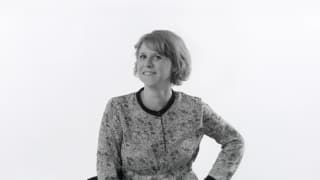
Photo credit — Xavi Silva es consejero delegado de Hemav.
Transcript Audio in Español — text automatically translated· AI-generated transcript
0:00 The great thing is that today we have an accuracy of over 95% in our 0:05 results. That's the strong point of our technology. 0:10 Impact.info, another way to start a business. 0:14 Good morning. Welcome to the podcast for entrepreneurs who want to change 0:19 things, starting with their own companies. Companies like EMAB, which 0:24 turns data into more efficient and responsible agricultural decisions. 0:29 Well, I am Chavis Iba García, I am co-founder and CEO of EMAB and the truth is 0:36 that I live and reside in Barcelona. Tell us, what is EMAB? Well, EMAB is a 0:40 technology company that was founded 13 years ago and our product, 0:46 our solution is Layers. Layers is ultimately a digital platform where we have 0:50 developed an AI, which is so trendy now, focused exclusively 0:54 on agriculture and the focus of our work is the estimation of 1:02 production and quality in crops. In other words, we are able to 1:07 map, digitize a plot in our platform and through that, 1:12 with satellite data and climate data, we can say how many tons of 1:18 product we are going to be able to harvest from that plot and with what quality. How did 1:24 the idea of Layers come about and what led you to combine drones and big data in 1:30 agriculture? When we started, as you said, we were solely 1:36 focused on drone technology and how we could use that technology to 1:40 transform it into something useful for agriculture and we have changed a lot since then 1:45 because we no longer make drones, we don't build or design them, we only 1:49 work with data. It is true that we still use drone data in 1:53 some of our products, in our processes, but 1:57 mostly now we use satellite data, climate data, and the database of 2:02 our users to provide this harvest prediction, quality, to ultimately manage better the crops and it all started from an idea we 2:06 had in university. I am a space engineer with my 2:13 colleagues and back then Carlos, who is another co-founder, had 2:16 fields from his family and we were looking for something that could change the way 2:21 his parents and family had been working the land and we thought 2:29 that applying drones to that sector could be very 2:33 beneficial and that's where it all started. 2:37 And what changes can a farmer notice in their operation in terms of 2:43 performance, costs, maybe even sustainability? Yes, before we get into 2:49 the costs, let me explain our purpose, why we did 2:55 this, it's because when we started what we realized, when we were 2:59 starting with drones, but then trying to provide that service, that 3:03 added value to the end user, to the producer or the industry, was that everyone 3:08 always asked us and it seemed like their headache or their 3:12 big concern was knowing what the production and productivity would be, 3:16 3:21 the performance of their fields and that is the focus of our 3:27 day to day. Our purpose is to reduce the uncertainty that exists 3:31 around production data, because what happens in agriculture is that you don't 3:35 know how much you are going to produce until the producer goes, harvests and weighs the truck. 3:39 So, of course, when this has already happened, it is too late, you have already made all the 3:45 treatments you had to make, you have made all the decisions you had 3:47 to make, so what we want and contribute today to the 3:52 sector is to know that data before it happens, so that all the decisions that 3:59 are made during the process are made much more easily, because if you 4:06 end up with accurate data, it is easier to make the right decision, the 4:10 best decision, which is the one that maximizes production and tries to 4:15 reduce costs. So, practically, answering your question, it is 4:21 that in every production process, in the end, there are treatments. The producer 4:28 has to make decisions at all times, from what seed 4:33 to plant, about what crop, how much fertilizer, how much irrigation, what products they have to 4:40 apply, and in the end all those decisions are based on how much I am going to get, on what 4:44 that production will be. So, practically, for example, in irrigation, last 4:50 week we were with a large producer in Brazil, we usually work 4:54 with producers of more than 10,000 hectares directly, and for 4:59 all small producers we have a distribution network, but 5:03 well, in that case, we saw that two large pivots they had, one was 5:08 stressed, the other was not stressed, so our irrigation recommendation 5:11 was very different for one than for the other, but in the end, in terms 5:15 of practical terms, last week's irrigation saved 5:20 a thousand cubic millimeters for 100 hectares, but to give you an idea, in one 5:23 week those two pivots managed to save what 10,000 5:28 people consume in a week. And also, the other thing we do is, we are 5:33 able to help them, which is one of the main points in the 5:37 harvest logistics, find what the optimal harvest point is, and that allows for 5:42 productivity increases of almost more than 10%. 5:46 That increase in production does not come from adding more water or less water, but 5:50 with the same type of irrigation they are using, if they have irrigation, we are 5:54 able to increase that productivity. 5:57 Since your foundation in 2011, technology has evolved a lot. 6:02 How has EMAB changed since its foundation and to what extent has that technological evolution 6:08 modified your work? 6:11 Well, the evolution has been tremendous, 6:13 because we started by building drones, designing and building drones, and upon 6:18 realizing that the sector was asking us for data and making 6:23 decisions based on precise data, we modified everything and developed 6:29 a software platform and an AI in 2019. So, since we started 6:35 now, at a technological level, it has nothing to do with it. And the specialization of the people 6:40 we had has also changed a lot. At first, they were all 6:44 aerospace engineers building ships, and now they are 6:47 all software specialists, people with PhDs in agriculture. 6:53 Do you have specific cases, testimonials from farmers that you can share that show us a bit of these results? I mean, I don't know to what extent we can say that 6:58 the data estimates are finally accurate. 7:02 Sure, yes, yes. I mean, this is our day-to-day. So we have a control every week of what 7:06 the level of accuracy of our data is compared to reality, which 7:12 is provided by the producer. So the reality is that today we have an 7:15 accuracy above 95% in our results. That is the strong point of 7:20 our technology. And that in terms of results, as I mentioned before, well, 7:24 in irrigation, for example, we have users who are saving about 10% of the 7:30 irrigation they apply to their plots. But as I said, for a case of 200 7:35 hectares, it might mean the water consumed by 10,000 people a week. 7:41 And at the level of producers, at the level of production, at the level of harvest logistics, 7:46 we have documented cases of large companies that are increasing 7:52 production by up to 10% at the global level of the factory, which is huge. 7:57 We are talking with Xavi Silva, co-founder of Layers. Beyond the 8:02 traditional crops, what technologies like yours can be applied to other 8:07 areas? Also in biodynamic agriculture, agroecology, viticulture... 8:12 Absolutely. In the end, as I said, the beauty of the system is that it is super 8:18 transversal. Everything that is agro, everything that is the environment and that 8:23 needs to be monitored and needs that predictive part at the level 8:27 of production, the system can be very useful because all the 8:33 decisions that will have to be made in the different branches of agriculture, 8:40 can be made based on reliable data and thus, as I said earlier, 8:44 it is easier to make the right decision. 8:50 Impact.info, another way to undertake. 8:53 In Spain, 18 years is the legal age to create your own company. You 8:57 told me before that this project was born at the university, 9:03 so you were around that age. Where did you see yourself when you were 18 9:08 years old? Well, we started the project, I think I was 21 because it was 9:13 my third year of college. The truth is that I have always dreamed 9:17 of starting a company since I was very young. I wanted to start a rocket company, so 9:21 that's why I went in this direction. I never imagined that 9:26 we would get to where we are or that it would be this path, but I did have a lot of enthusiasm for entrepreneurship and I think it's something we need to promote at 9:32 the country level, that one of the options we have when we are in that. 9:36 9:42 9:47 At that age, the phase is to undertake. It's the moment when we don't have as much risk, we don't have the responsibilities that you have later, as I'm sure you do. So it's a path that obviously has its ups and downs, but it's always very exciting. Thanks to Xavi Silva, co-founder of Layers. You can listen to this interview on the impact.info website. You've listened to Impact.info, another way to undertake. 9:51 9:54 10:00 10:06 10:11 Embed this interview on your site
Show this player directly on your site to share the interview with your audience.
Copy embed code View generated code