translate This article was automatically translated from its original Français version. Read the original
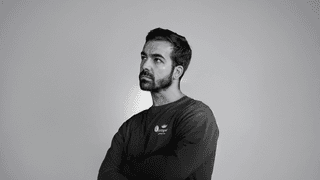
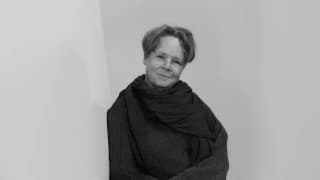
Kareen Maya Levy is the co-founder of the association Un Nouveau Cycle, which trains technicians in preventive maintenance to extend the life of our appliances, benefiting both the planet and our wallets.
During the summer break, the teams at impact.info invite you to (re)listen to one of our episodes published this year.
This episode highlights the testimony of Kareen Maya Levy , co-founder of Un Nouveau Cycle .
Enjoy listening!
Florence Jaillet
impact.info journalist
Published on 3 August 2026
Transcript Audio in Français — text automatically translated· AI-generated transcript
0:00 Hello and welcome to the podcast for those who want to make a difference 0:09 within their company. 0:11 Preventing breakdowns of our household appliances can not only preserve the planet 0:16 and our wallets, but also create jobs. 0:19 Karen Maïa Lévy. 0:20 Karen Maïa Lévy, I was born in Paris and I am the co-founder of Un Nouveau Cycle. 0:27 So what is Un Nouveau Cycle? 0:29 Un Nouveau Cycle starts from the observation that 500,000 tons of products 0:34 are thrown away every year. 0:36 In France, that's a lot of waste and a lot of waste of materials that have 0:41 a lot of value. 0:42 And 60% of breakdowns in large appliances are due to improper use or poor 0:48 maintenance. 0:49 Even though 80% of breakdowns could be repaired, today less than 40% of products 0:56 will have the chance to meet a repairer because repairing is still not 1:01 a habit today. 1:03 And there aren't enough repairers. 1:05 Household appliances resonate with everyone, it affects everyone and it's a very 1:10 good vehicle to convey messages and bring up certain topics. 1:14 We started from these observations and asked ourselves what we could do? 1:18 Of course, these are issues that are being considered by the State. 1:21 We're talking about repair in the GEC law, there's a repair bonus, there are 1:27 indices to encourage consumers to buy more durable, more repairable products, 1:31 there's all that, but it's not enough. 1:32 And the idea came to say, if we acted not at the global level, but at the level of the 1:38 territory, so really starting from the local and ultimately not positioning ourselves once 1:46 the breakdown has occurred, but working before the breakdown to try to avoid it. 1:51 By positioning all these elements, we completely change the paradigm and so we decided 1:56 to create a new cycle whose mission is to change behaviors, 2:02 at least to do everything possible to extend the lifespan of household appliances 2:06 in homes. 2:07 But to do this, there aren't enough repairers in France today, so 2:11 we're going to talk before the breakdown, we're going to talk about prevention now to avoid breakdowns 2:16 and we can't ask repairers to take on this issue because they already have 2:20 plenty of work, they are already not numerous enough. 2:23 So we said, OK, we also need to address the issue of who will provide this 2:30 service, how we will develop this service and how we will enable users 2:35 at home, who will help them to better use, to better maintain their equipment to 2:41 make it last longer. 2:42 This approach and this need and this lack of repairers led us to the environmental aspect. 2:49 to a social aspect and therefore say, we will take the opportunity to train people who are 2:55 far from employment in this new profession that didn't exist, technician or technician 3:01 in preventive maintenance. 3:02 So, who do you work with? Do you have key audiences? Do you offer this to everyone? How do people contact you? How does it work? 3:07 So, at the territorial level, still in the same reflection, who will it be useful for, 3:11 who can it be most useful for, who can it serve the most? We realized that making your appliances last also has an impact in terms of purchasing 3:12 power. 3:18 ADEME estimates that prolonging the lifespan of 3:21 your equipment saves more than 600 euros a year. 3:26 So, the most logical and coherent thing is to target this service to people 3:27 for whom the impact in terms of purchasing power would be the most useful. 3:32 And so, we chose our areas of operation by focusing on neighborhoods that are 3:33 priority or urban policy areas and directing our service to tenants 3:39 of social housing in general. 3:43 So, first, targeting the service towards social housing tenants, but also, 3:50 it's a good way to work on the employment side and to find our technicians 3:56 and technicians in preventive maintenance. 3:58 We said, we will look for people who are far from employment and we will 4:04 also perhaps find them more easily in these neighborhoods and give them legitimacy. 4:11 And what we observed is that when you are not trained, you don't go directly 4:13 into a technical job. 4:16 You need certain training, you need a certain confidence to enter a technical 4:22 job. 4:29 And we said, in fact, this technical job of technician or technician in 4:30 preventive maintenance should be affordable and accessible. 4:35 It will also help us promote repair jobs. 4:36 And so, the audiences we target for the training part are people who are far from 4:38 employment and we will particularly target young people who are searching for meaning, who 4:42 would not spontaneously go towards training in repair, which might scare them, 4:47 where they might think, I am not legitimate. 4:53 So, we will seek out these young people. 5:00 We will seek out women who, after discussions with Transtravail, we see 5:04 that we do not necessarily offer technical jobs. 5:07 And then, we will also look for young seniors who might have left the workforce a bit too 5:08 early compared to retirement age and who could very well 5:13 thrive in a job that is both a service job and a technical job. 5:16 So, we are really targeting these three audiences, three very different audiences, mostly residents. 5:21 5:24 5:28 5:33 priority neighborhoods of urban policy. 5:37 We're going to meet them, we're going to promote technical jobs and training in 5:43 preventive maintenance. 5:44 Then, we're going to train them and together, we're going to deploy a preventive maintenance 5:50 service for the residents of social housing. 5:53 All this within a territorial ecosystem. 5:58 You've already given a lot of leads, but what specifically are you doing? 6:02 You're changing things, you're shifting the lines, changing the daily lives of many people. 6:03 And it may also help to elevate topics to a larger scale in society. 6:07 So, the first point to make things move in society, I'm going to talk about our development model and our economic model, which is a model 6:12 based on the economy of functionality and cooperation. 6:13 Because we didn't come in saying everything we can do, we're going to do it all 6:18 alone. We come to the territory saying everything we're going to do, we're going to do it with 6:23 actors who are already present in the territory. 6:26 And it's by cooperating together that we can create a service that will change the 6:29 lives of residents and, in the long run, will evolve many things. 6:35 So, cooperation is super important and this cooperation engages with 6:38 associations or integration structures that are present in the territories. 6:44 We work notably with employment-focused companies that are developed in the 6:48 territories of the zero long-term unemployment experiment. 6:54 So, employment structures, integration structures. 6:59 We work with landlords, we work with local authorities. 7:04 We also aim to work with repairers because we're going in the same 7:08 direction. The goal is to stop creating waste and to repair products 7:10 in case of breakdown. We also discuss with eco-organisms that talk about waste and 7:15 talk about refurbishment and reuse. 7:19 In fact, we're building an ecosystem of actors, but really starting from the territory and 7:24 that's how we're going to have power and that's how we're going to change people's lives. And then, the training of technicians and the service changes 7:29 the game a lot. In terms of training, it's a way to legitimize people and bring 7:32 people into technical jobs and contact jobs, jobs they wouldn't have gone into. So, in terms of training, we're changing the view and the lives of 7:38 the people we're training because we're actually offering them new perspectives. Regarding the service, it's interesting because we go to people's homes. So, in fact, we create connections, 7:42 we create a meeting, we talk to them about what they use every day, their 7:48 equipment, and we give them advice and this advice will also change their relationship 7:54 with their products. And that's where it becomes interesting, it's that we're going to talk. 7:58 8:03 8:07 8:14 8:17 8:24 8:28 about the product, how to make it last, how to use it better, but we will also talk 8:33 about the breakdown that might happen, even because of wear and tear and what to do 8:37 in case of a breakdown. So, we will be able to address questions related to resources, 8:43 to the depletion of resources. We will be able to address questions related to energy, 8:47 to consumption, how to reduce consumption. We will be able to address questions related to 8:51 waste. And this is how, through this service, we will actually generate positive externalities 8:58 in many, many areas. 9:07 Karen Maïa Levy, you are the co-founder of the association Un Nouveau Cycle. 9:11 16 years old is the age in France to start your own business. 9:13 Voice 16 years old, what were you doing? Did you already have the idea of creating an association, 9:17 a business? Were you already repairing what you couldn't stand? 9:22 Waste, throwing things away? 9:23 Well, actually, no. None of that. At 16, I think I was not very responsible. 9:31 And above all, it wasn't the same era. What I find more interesting, ultimately, 9:36 is the 16 years of my children, who I find much more involved in society. 9:42 And they have the opportunity. I didn't have feelings at their age, but I see how 9:47 they react. Today, they have the opportunity to get involved in associations. 9:52 So, the idea is not necessarily to create a business, nor to necessarily invest at a 9:57 professional level, but already to build strong commitments. That's what inspires me. 10:03 It's my children, it's also all the young people around me who are facing challenges that are 10:10 difficult and a future that seems more complicated than the one I had in perspective at their age 10:16 and who have a power of resilience and commitment that I find wonderful and very 10:23 inspiring. Thank you to Karen Maïa Levy, co-founder of Un Nouveau Cycle. You can find this 10:29 podcast on our website impact.info. This was Impact.info, doing business differently. Embed this interview on your site
Show this player directly on your site to share the interview with your audience.
Copy embed code View generated code
![[Rebroadcast] Why Commit to Extending the Life of Our Appliances?](/_next/image?url=%2Fuploads%2Fimages%2F2026%2F07%2F7288f45a-3971-4bf9-80e0-a17e71e93207.webp&w=1920&q=75)