translate This article was automatically translated from its original Français version. Read the original
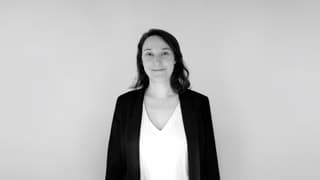
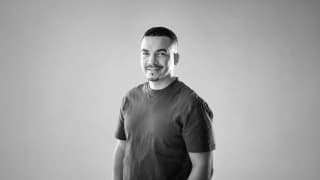
Nathalie Naulet is the project development coordinator for Forêts en Vie, a non-profit organization created by RAF, the Network for Forest Alternatives, to enable people working in forests or with management and conservation projects to access forest land.
During the summer break, the teams at impact.info invite you to (re)listen to one of our episodes published this year.
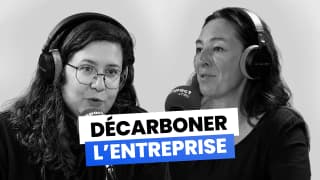
This episode highlights the testimony of Nathalie Naulet , project development coordinator for Forêts en Vie .
Enjoy listening!
Florence Jaillet
impact.info journalist
Published on 10 August 2026
Transcript Audio in Français — text automatically translated· AI-generated transcript
0:00 Hello and welcome to the podcast for those who want to make a difference 0:10 within their company. 0:11 The forest has countless lessons to teach us, bringing its ecosystems back into 0:16 the public sphere, reconnecting with the living is the best way to protect it today 0:21 and for future generations. 0:23 Nathalie Naulet. 0:25 I am Nathalie Naulet, I was born in 2072 in Drancy and I am the coordinator of the 0:32 Forêts en Vie endowment fund. 0:33 So what is Forêts en Vie and how does it work? 0:37 So Forêts en Vie is an endowment fund, a non-profit public interest structure that 0:41 was created by the RAF, the Network for Forest Alternatives, 0:46 to allow people who work or want to do things in the forest 0:50 to access land, especially since many owners have very small, tiny plots. 0:54 And so the idea of the RAF was to set up a tool that would allow associations 0:55 to access the forests in their territory and carry out activities that offer alternatives, 1:00 like wood harvesting, but not only that, nature activities, forest outings, forest schools, 1:05 you know, a whole wide range of activities. 1:11 We acquire it through donations, monetary donations, donations of forest land, bequests, and once 1:13 we have acquired these forests, they are permanently protected from speculation since they 1:18 belong to a non-profit public interest structure and they are 1:22 made available to structures that are themselves of public interest and 1:26 non-profit. 1:29 So what is the approach of private owners in this initiative? 1:30 It should be noted that the vast majority of forest owners do not manage their 1:35 forests. 1:39 There are 3.5 million forest owners and out of these 3.5 million, 70% 1:40 have at least one hectare and many of them don't even know 1:46 where their plots are located. 1:50 In fact, sometimes they don't even live in the territories anymore. 1:51 And what generates situations that are shocking today is that there are people 1:53 who live at the other end of France, sometimes at the other end of the world, who can 1:59 act on your landscape, on your territory. 2:02 Our entry point is the project holders, these associations that have made land available 2:05 since we first validate their project before saying 'okay, we will acquire a forest', 2:09 it's the people who live in the territory, who are in contact with the owners, 2:13 who meet them and propose to acquire their forest or they are 2:17 people who simply want to sell. 2:20 And the approach is to meet them, to explain that they can sell 2:22 to a citizen endowment fund if they wish and that the idea is that, it's... 2:26 2:30 that we buy it back, then we make it available and it will therefore remain with 2:34 the people who are there. 2:35 It's really this aspect of territorial anchoring, that the woods, the forests can provide 2:41 wealth, but not just monetary wealth, also human wealth and ethical, ecological wealth, that all these activities are really carried out by people who live 2:44 locally and not by people who will come, cut down, leave and 2:49 the wood will go to the other end of France at best, to the other 2:53 end of the world at worst. 2:55 These people who live nearby, what projects do they have for 2:57 their forest? 3:01 We have a forest in Lot for example where we are in a context not at all of 3:02 wood production. 3:06 Forests are not just trees. 3:07 Trees are one of the components of the forest, but the forest is above all 3:08 a soil and it's your soil that will determine which species you will have on it. 3:12 Hence the absurdity of always planting the same species, regardless of the 3:15 soil. 3:20 There are really questions to be asked. 3:21 I close the parenthesis and we have a forest in Lot where it is not at all a 3:22 production forest. 3:27 It's really on very dry slopes, it's really not harvestable 3:28 as wood. 3:33 On the other hand, it's a great ecosystem. 3:34 So, these are mainly nature outings, outings for children, 3:35 for adults. 3:39 Then we have a forest for example in Haute-Loire where we are in a forest a bit of 3:40 medium mountain, so rather coniferous. 3:45 And the idea is to harvest wood, but not only, it's also to work on 3:47 micro-habitats, to identify, is there, in this case in the forest, 3:52 there are badger holes, to bring diversity also at the level of species 3:57 and then to work, to leave areas that will age a bit to bring more 4:01 biodiversity. 4:05 We have our largest forest which is in Creuse which is 46 hectares where there has already 4:06 been 14 hectares of clear-cutting, but with in this forest also old beeches, 4:11 well areas, there is a zoning that is very interesting, a diversity. 4:16 So, it's about management, there for once, pure management, but 4:19 also participatory projects every time when there is this notion of participatory, 4:23 that is to say 47 hectares, we have to have a simple management plan on it, 4:28 and well the project leaders will do it collectively, they will do it together, 4:31 with the people from the territory, explaining what the projects are, what they want. 4:36 4:39 to do, how do we go about it, etc. 4:41 So, we have other forests where projects also involve management, but 4:48 also welcoming the public, let's say, in difficulty. 4:52 It's going to be young people who are a bit socially isolated, we will have a diversity of audiences 4:58 that is a bit different and that we try to reconnect and bring back, well when I say we, it's 5:02 not me, it's the association Porteuse, which tries to reconnect people through the forest, 5:08 through nature, to the reality of things. 5:10 What does the forest bring in terms of biodiversity, what does it bring 5:14 to people as well? 5:15 It's important to know that the forest is the water we drink, it's the air we breathe, it's 5:19 a great air filter. 5:20 When there are no more forests, often you have big dust problems, you 5:26 have wind problems, because the winds are no longer slowed down by the 5:30 forests. 5:31 It's important to know that the vast majority, over 60% of our drinking water sources are 5:35 in forests. 5:36 And then, it's our landscapes, we must not forget that we have the impression that the tree 5:41 has always been there, but no, it was small, it grew, it developed, it will age, 5:46 it will die, if it follows its new course quietly, even if we are on scales 5:50 of time that are enormous compared to our own scale. 5:53 But it is also and above all, all the water and all the rain we can have, the forest 5:58 generates water, and when there are no more forests, there is no more water. 6:02 There is a link to nature in particular, what is the ancestral link we have with the 6:09 forest? 6:10 When people want to recharge, often they go for a walk 6:14 in the forest. 6:15 And then, we will be in spaces that are closed, spaces that will be semi-open, 6:20 we will be in clearings, we will be in different atmospheres, if you have 6:24 conifers, if you have broadleaf trees, if you have a mix, if you are in 6:27 monocultures. 6:29 All of this will already affect the atmosphere, how you feel, the age 6:33 of the trees. 6:34 The older the forest, the better you feel. 6:36 And this is not just me saying it, it is also proven. 6:38 To also complete the answer on biodiversity, it is a place where a whole bunch of species meet, both 6:44 animal and plant, that will not necessarily meet in environments that are entirely open or entirely closed. 6:48 Hence the importance, when managing forests, to work on semi-open environments to maintain this biodiversity as much as possible. 6:52 And then, you will have everything we call micro-habitats. 6:55 6:58 7:02 So, for example, a hole from a woodpecker in a tree, that's going to be a fork, a broken branch. 7:06 You have water that will enter the wood, all of this will create every time 7:07 micro-habitats that will lead to a diversity of animals and plants 7:10 that will develop, which you won't find in non-forested areas. 7:15 What is it that you do? Your missions are changing the game, making a difference. 7:18 What does it allow to create, to advance as a topic? 7:24 It's a collective project, it's citizen-driven. 7:27 It gives everyone the opportunity to contribute, by making 7:29 a donation to Forêt Envie or by participating as a project leader. 7:34 The other aspect is that we are definitively removing the forest from speculation. 7:37 Today, we are putting way too much pressure on the forest. 7:41 When you sell green investments with investments in forests, we can still 7:45 ask questions. 7:48 First of all, we are dealing with living things, so let's ask the right questions. 7:50 I wouldn't bet a penny on what you tell me about forests in 30 years, given what we 7:53 are putting them through today. 7:57 The forest should be a common good. 7:58 Really, our work, our desire, is to create common goods, areas that 8:01 belong to everyone or to no one, at least that belong to those who 8:05 live there, again, I insist. 8:08 This is very important because once it becomes the property of the endowment fund, it can't come back. 8:11 Let's imagine that one day, Forêt Envie no longer exists. 8:15 All the assets of Forêt Envie can only go to structures of general interest 8:17 that are not for profit. 8:19 So, they won't fall back into individual ownership. 8:22 And then, where it changes the game too, is that it allows people who might not 8:23 necessarily have the means to access forest land to carry out their activities 8:26 in the forest. 8:30 With an entry point that, for us, is crucial, the social aspect is very important. 8:34 So, fair compensation for the local actors, that loggers and hauliers 8:35 are paid properly and that we also allow them to showcase all their know-how, all 8:40 the technical skills they have, when we pay them properly and ask them 8:44 to do clean, selective work, where we don't cut all the trees at once, 8:49 where we are attentive to what we do and where we take care of our surroundings. 8:53 If you pay the person properly, in fact, they enjoy doing this, rather 8:56 than going for volume, volume, volume to scrape by with a miserable salary 8:59 at the end of the month. 9:04 Nathalie Naulet, you are the coordinator of the citizen endowment fund Forêt Envie. 9:07 9:13 9:18 At 16, it's the right time in France to start your own business. 9:20 You, at 16, what did you dream of accomplishing? Did you go to the forest? Did you 9:24 already care about gathering for the common good? 9:27 No, if I said yes, I would be lying. 9:28 At 16, I wasn't asking myself those questions. 9:32 No, at 16, I wanted to go into agriculture. 9:34 I initially studied agriculture. 9:36 I'm not from that background at all, but I've always been drawn to nature, 9:40 at least. 9:41 Actually, it was at agricultural high school. 9:42 My teachers told me, since you don't have a farm to take over, do something else 9:45 first. 9:46 So, I went into forestry studies with a completely conventional curriculum. 9:50 I then went to the ONF and so, it was a gradual process. 9:54 Later, I left the ONF, the National Forestry Office, to do something completely 9:58 different. 9:59 I have a somewhat atypical background and it was when I decided to return to the forest 10:02 that I started asking myself the right questions and that's when I began to be more 10:07 involved with the RAF and all these collective projects. 10:10 But at 16, I didn't have that concern for the collective, I didn't have it. 10:14 Even if we start to ask questions about nature, we didn't talk about it like 10:18 today regarding our climate change issues, etc. 10:22 So, it's true that the awareness wasn't perhaps quite the same as today's youth. 10:25 Thanks to Nathalie Naulet, coordinator of the Citizen Forests in Life endowment fund. 10:26 You can find this podcast on our website impact.info. 10:30 10:31 Embed this interview on your site
Show this player directly on your site to share the interview with your audience.
Copy embed code View generated code
![[Rebroadcast] Why Should Forests Become a Common Good?](/_next/image?url=%2Fuploads%2Fimages%2F2026%2F07%2F9b2a88ce-e14a-4ea3-a357-5e1d4b89084a.webp&w=1920&q=75)