translate This article was automatically translated from its original Français version. Read the original
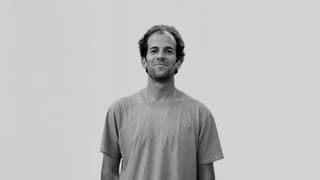
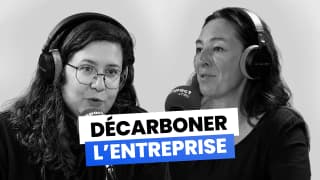
Guy Pezaku is the president and co-founder of Murfy, a home appliance repair company launched in 2018. Today, it also focuses on the installation and maintenance of photovoltaic panels, as well as heating systems like heat pumps.
During the summer break, the teams at impact.info invite you to (re)listen to one of our episodes published this year.
This episode highlights the testimony of Guy Pezaku , co-founder and president of Murfy .
Enjoy listening!
Florence Jaillet
impact.info journalist
Published on 5 August 2026
Transcript Audio in Français — text automatically translated· AI-generated transcript
0:00 Repair has now become part of the habits of the French. 0:04 Two out of three of us have repaired or had an item repaired in the last six months, 0:09 thus extending its lifespan. 0:11 The best fridge is the one in our kitchen. 0:14 It's true that the cheapest solution when we have a breakdown is to repair it. 0:19 We manage to repair devices in 83% of cases 0:22 and in one out of two cases, we repair them without changing any parts. 0:30 And what if the best equipment was the one we already had? 0:33 We're talking about the great return of repair in France, 0:37 which preserves the planet and our purchasing power while creating jobs, 0:42 in this new episode of the podcast for those 0:45 who want to make a difference within their company, Guy Pesacou. 0:50 My name is Guy Pesacou, I was born in '92 in Bordeaux, 0:55 so I'm 33 years old and I'm the president and co-founder of Murphy. 0:59 So what is Murphy? 1:01 Murphy is primarily a home appliance repair company 1:05 that we launched in 2018. 1:07 At first, we wanted to solve the problem of overconsumption of home appliances, 1:11 so I gathered with my four other co-founders 1:15 to build an efficient repair service across France, 1:20 with employed technicians. 1:21 We were in a market where there was a shortage of labor, 1:24 so we created a subsidiary that is the training organization 1:27 which allows us today, for almost 60% of the French, 1:31 to send a technician to your home within 24 hours 1:35 to repair your home appliances, like washing machines, dishwashers, 1:38 tumble dryers, all the big products in the house. 1:40 And for over a year now, 1:43 we have become the leader in out-of-warranty home appliance repair in France 1:49 and we were wondering how we could go further 1:51 in our social and environmental mission. 1:54 So, we launched activities around home energy, 1:59 in the installation and maintenance of photovoltaic panels, 2:03 but also heating systems like heat pumps. 2:06 We realize that the major factors of consumption for households, 2:12 are energy consumption, but also, 2:15 we emit a lot of CO2 through fossil fuels 2:19 that we burn to heat ourselves or to drive cars. 2:22 And so, we wanted to support the energy transition of the French 2:25 by offering quality equipment installed by qualified local technicians. 2:30 and especially that these are devices that we can maintain and repair over time 2:34 to ensure that they last as long as possible, 2:37 which has been our mission since the company was created. 2:40 And a desire to make people more autonomous, 2:44 to take back a bit of control over their surroundings? 2:47 The energy transition and the circular economy, 2:51 indeed, the challenge is already to use our devices as long as possible 2:55 all the equipment we have at home 2:56 because the best fridge is the one in our kitchen. 3:01 And so, it's clear that the cheapest solution when we have a breakdown is to repair it. 3:05 We manage to repair devices in over 83% of cases 3:08 and in one out of two cases, we repair them without changing any parts. 3:11 And then, unfortunately, in France, we don't have fossil energy on our territory. 3:17 So, we import oil and gas from the other side of the world and from countries 3:21 that are not necessarily friendly countries. 3:23 So, it's both a question of sovereignty for France to electrify our uses 3:28 to not be dependent on those countries. 3:30 And then, in addition to that, for the French who at least have the opportunity 3:34 to install photovoltaic systems, it's about autonomy and above all, it costs less. 3:39 Because in fact, when we install solar panels on our roof, 3:42 we don't have to pay for the land of the power plant 3:46 because our roof was already there. 3:48 We don't pay the network to transport electricity to our homes. 3:51 We don't pay the ATGA on the electricity we produce. 3:54 We don't pay the contract manager. 3:57 So, this means that the electrical energy produced 4:00 will cost on average between 70 or 80% less 4:05 depending on where we live compared to what we buy from the grid. 4:07 So, it's a question of both French sovereignty and household autonomy. 4:12 And it helps to limit our environmental footprint 4:14 by reducing our CO2 emissions. 4:18 Do we have an idea of what we will save 4:21 by repairing our household appliances, 4:23 devices that won't need to be produced? 4:25 So, financially, already, the average cost of a household appliance, 4:29 is about €450. 4:32 And a repair on average, our customers will pay about €110 4:37 and it will work in 83% of cases. 4:39 And this has been made possible in particular thanks to the repair bonus, 4:42 which is a support that helps the French to repair. 4:44 And then, in terms of environmental footprints, 4:47 the lady brought out some great studies on that. 4:49 The production of a washing machine emits about 300 kg of CO2 4:54 that went into making it. 4:56 It's largely due to the entire phase of material extraction, 5:00 transformation, assembly, and a bit of distribution. 5:04 So, we did a carbon assessment and an average repair 5:07 emits 12 kg of CO2. 5:08 So, it's significantly more efficient both for the planet 5:13 and also for our wallets to repair rather than replace. 5:16 In what way, in your opinion, what you have set up through Murphy 5:20 will shift the lines, will change things, 5:23 either for the individuals 5:25 you collaborate with and on a larger scale as well? 5:30 Murphy, already, we are not alone 5:32 because we are part of a whole movement of companies 5:35 that are trying to make a difference. 5:37 Ultimately, it's the sum of all collective efforts 5:39 that creates change. 5:40 But I think our great strengths are, 5:42 that we have managed to make appliance repair 5:48 interesting and appealing to the French 5:52 and also for our employees who are proud to do this job. 5:55 I think that when we started in 2018, 5:57 and explained to our parents that we were going to become 5:59 an appliance repair technician after all the studies we had done, 6:02 they didn't understand why we were suddenly going to become scammers. 6:06 The perception that the French had of repair technicians in 2018, 6:09 is probably about the same 6:11 as that of locksmiths even today. 6:13 First of all, making sure that both our clients 6:16 are proud to call on us and our employees too, 6:18 that has been a long journey. 6:21 I'm not the only one who contributed to it, 6:22 but in any case, we can say that today, 6:25 we are proud of what we do. 6:26 That's what also motivates all the teams. 6:30 Every day, when you live in the suburbs of Toulouse, 6:33 you are a Murphy technician and you get up in the morning, 6:35 you do all your interventions and at each client's place, 6:38 wherever you go, you will receive the same care 6:41 and the same desire to really help 6:43 to create something positive. 6:45 All of this is organized. 6:46 I think that's one of our great strengths. 6:48 Then, we are in a sector where for 30 years 6:53 we've been telling our young people that progress is 6:55 to buy cheap products, 6:58 made halfway around the world. 6:59 And so, we've stopped training in technical jobs, 7:02 whether it's home appliance technician or photovoltaic installer 7:06 or heat pump maintainer. 7:08 Developing this kind of skills in the regions, 7:11 is a strategic issue for France. 7:13 And so, in 2021, we created Murphy Academy, 7:15 which is our subsidiary, a training organization. 7:17 Since 2021, we've trained 350 technicians in the regions. 7:22 And that, I think, is one of the things that makes us the proudest today 7:26 because Murphy is known for our ecological impact. 7:31 That's what clients see when they say we are a company 7:34 that fights to extend the lifespan of equipment 7:38 and electrify our uses. 7:39 But we are ultimately the employees who stay. 7:42 And what makes them, I think, the proudest is our social impact, 7:45 since we almost exclusively train all the technicians we recruit 7:49 in professional retraining. 7:50 So, these are people aged between 30 and 40, 7:53 who have already had a first career before 7:55 and who, sometimes even, are quite far from employment, 7:58 no longer see the company as a place for fulfillment 8:01 and personal development and who manage to regain an ambition, 8:06 to want to do good work and make sense, ultimately, 8:10 in their role in society. 8:16 Guy Pézacou, you are the president and co-founder of Murphy. 8:19 The season, it's the age in France to start your business. 8:22 Seasonal voice, what were you doing? 8:24 What do you envision for your future? Were you already repairing? 8:28 At 16, I wasn't yet aware 8:30 of all the issues of climate change 8:36 and also the issues of France's sovereignty. 8:39 So, at that time, I was young and carefree. 8:42 On the other hand, I've always done all sorts of odd jobs. 8:46 I was a gardener, a tennis teacher, 8:50 I did cleaning and pool maintenance, 8:53 lots of little manual jobs. 8:56 Despite that, I think I did a lot of studies 8:59 and I've always been drawn to those kinds of jobs, 9:01 finding that there was something noble and exciting 9:04 about having a real impact on the daily lives of customers. 9:09 And so, I've always been attracted, I think, 9:11 to operational field jobs 9:13 or jobs that involve contact with customers and service jobs. 9:15 In fact, ultimately, we first launched 9:18 thinking we wanted to help people. 9:20 And then we realized we could do it both 9:24 by helping them save money 9:27 and reduce their environmental impact 9:29 while improving France's sovereignty. 9:32 And I think that's how, ultimately, 9:34 with maturity and age, 9:37 we broadened, I think, our scope of intervention. 9:40 But by the way, I think that generally speaking, 9:43 the French are not stupid. 9:46 If until now, they preferred to heat with gas 9:50 or replace their appliances 9:54 with new ones, 9:55 it's not because they particularly enjoy that. 9:58 It's because it's much easier, it works well. 10:01 And so, even in the way we built Murphy, 10:04 we never wanted to have a moralizing discourse 10:07 towards our customers. 10:09 Besides, we see very few arguments on our website 10:12 like, "reduce your environmental footprint." 10:14 In fact, just because we have a good social 10:16 and environmental impact doesn't mean we should settle for mediocrity. 10:19 I think we can have a great service, 10:22 have a solution that is more effective for the French, 10:26 that meets the same essential needs, 10:29 to have functioning appliances, 10:31 10:33 to be able to heat in winter and move around, 10:36 while having an environmental footprint 10:39 that is much more expensive. 10:40 Thanks to Guy Pezaku, president and co-founder of Murfy. 10:43 You can find this podcast on our website impact.info. 10:52 Subtitling Société Radio-Canada Embed this interview on your site
Show this player directly on your site to share the interview with your audience.
Copy embed code View generated code
![[Rebroadcast] Why Training Repair Technicians is a Strategic Issue?](/_next/image?url=%2Fuploads%2Fimages%2F2026%2F07%2F3aaa48f4-1657-404a-89ca-1c614b66a857.webp&w=1920&q=75)